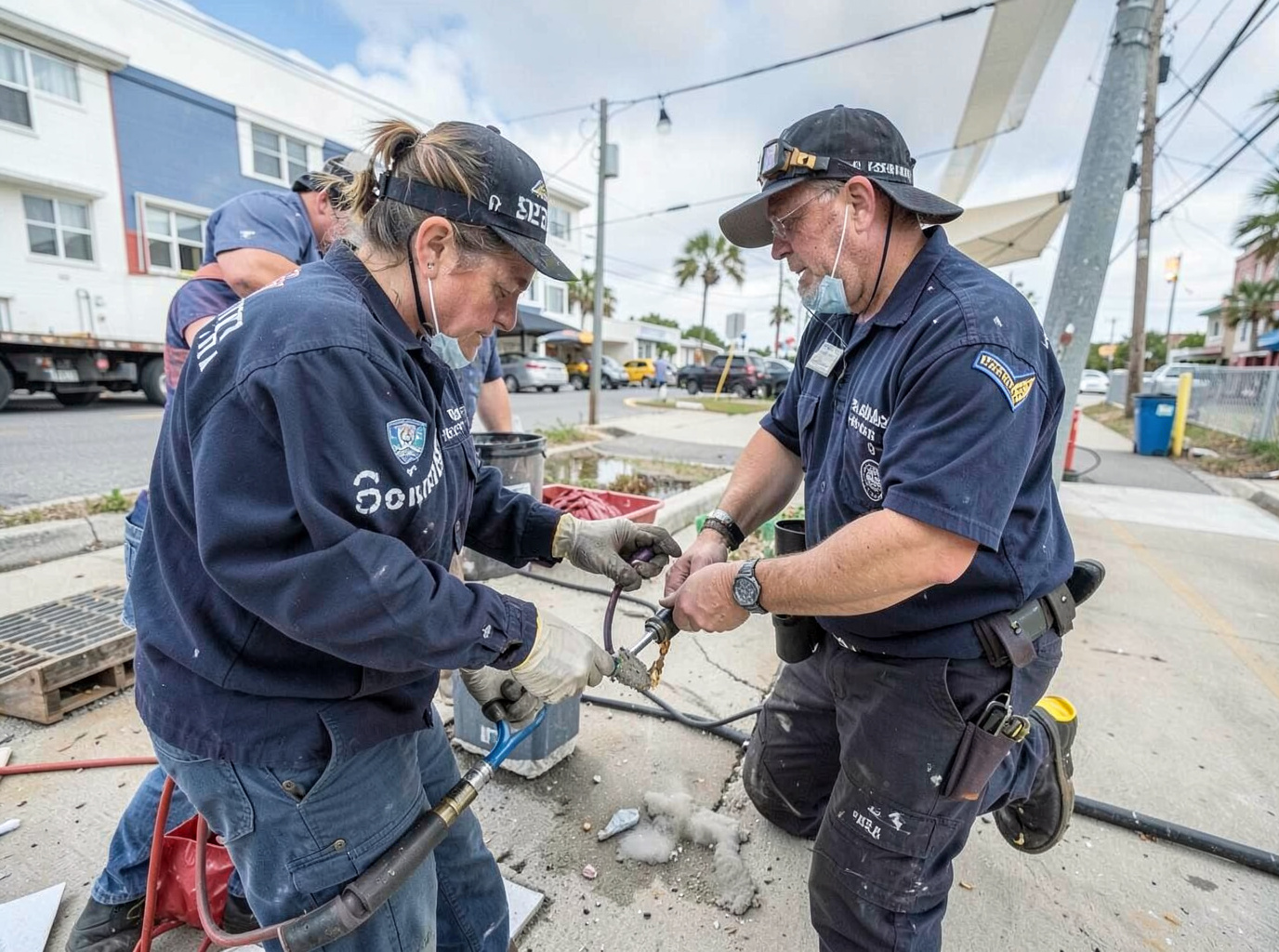
Virginia Beach water damage restoration crews know the difference between a burst pipe in a Kempsville ranch and storm surge flooding along the Oceanfront. Homes built from the 1960s onward in Lynnhaven and Great Neck sit on flat lots with sandy soils that hold moisture longer after heavy rain, so extraction and drying take extra days compared with inland neighborhoods.
Our trucks reach addresses near the Virginia Beach Boardwalk or off Princess Anne Road quickly because we start from Production Road. Humidity that stays high even after the rain stops means we run commercial dehumidifiers longer in Bayside and Thoroughgood than crews working in drier parts of Chesapeake or Norfolk.
When water enters through a failed sump in Sandbridge or backs up from the Lynnhaven River, we focus on removing saturated insulation under raised floors before mold sets in the humid air.
Around Virginia Beach
We regularly work near:
- 📍Virginia Beach Boardwalk
- 📍Cape Henry Lighthouse
- 📍First Landing State Park
- 📍Virginia Aquarium
- 📍Mount Trashmore Park
- 📍Naval Air Station Oceana
Water Damage Restoration in Virginia Beach — Local Notes
- •Oceanfront and Sandbridge properties sit on barrier island sand that drains poorly, so standing water after nor'easters requires pumps rated for salt exposure.
- •Many Thoroughgood and Great Neck homes from the 1970s have slab-on-grade construction with limited access under cabinets, lengthening the time needed to pull baseboards and place drying mats.
- •Naval Air Station Oceana flight paths cross residential zones; crews schedule loud equipment runs around base noise restrictions when working near those neighborhoods.
- •Cape Henry Lighthouse and First Landing State Park sit on higher ground, but surrounding streets still see tidal backup that pushes water into crawl spaces during king tides.