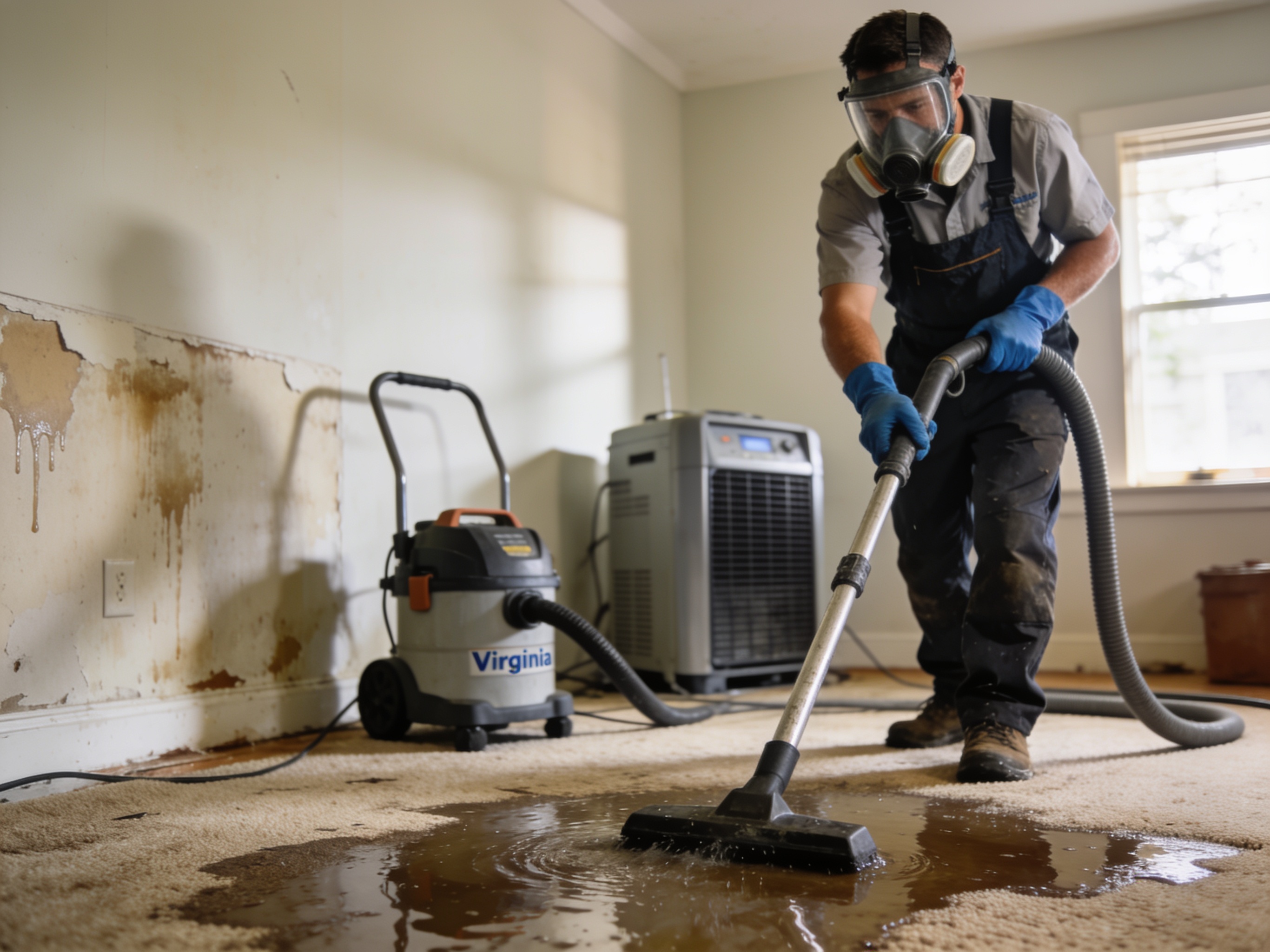
Virginia Beach's humid subtropical climate, moderated by the Atlantic, keeps relative humidity high year-round and accelerates mold growth once water enters a structure. Homes in older sections like Thoroughgood and Lynnhaven often have crawl spaces and pier-and-beam foundations that trap moisture against salt-tinged soil, while newer construction in Sandbridge and Great Neck can still suffer from wind-driven rain pushing past vinyl siding. Technicians must account for both the initial flood volume and the lingering vapor load that standard dehumidifiers sized for inland cities cannot handle.
Storm systems moving through the Chesapeake Bay region frequently drop several inches of rain in hours, overwhelming storm drains along Princess Anne Road and flooding low-lying yards in Kempsville. Saltwater intrusion from nor'easters or tidal surges near the Boardwalk and First Landing State Park requires different extraction chemistry and longer drying times than fresh-water leaks from interior plumbing. Crews stage equipment at the 2633 Production Rd shop so they can reach Naval Air Station Oceana or Mount Trashmore Park addresses within the same tide cycle.
Flooring systems common in Virginia Beach—engineered hardwood over concrete slabs in Bayside and carpet over plywood in Oceanfront condos—demand different drying protocols to avoid cupping or delamination. Hidden pockets behind tile in bathrooms or under built-in cabinetry in 1970s ranch homes routinely retain water unless moisture meters guide targeted removal of baseboards and drill holes for air movement. Skipping these steps leaves residual moisture that later appears as efflorescence on drywall or musty odors weeks after the initial call.
Technician insight
In Virginia Beach the thing that catches most people out with water damage restoration is how quickly the Atlantic humidity re-wets framing and insulation in older Kempsville crawl spaces once the visible water is gone; you have to keep drying equipment running days longer than inland jobs or the job fails the follow-up inspection.
Oceanfront Condo After Nor'easter
Wind-driven rain entered through failed window seals on the second floor of a 1990s Oceanfront building. Water migrated behind drywall and into the carpet pad below. Extraction removed 400 gallons, then drying equipment ran for five days until readings dropped below 12 percent. New baseboards and paint completed the repair before the next high tide cycle.
Water Damage Restoration Services We Offer
✓Emergency Water Extraction
Rapid removal of standing water from basements and first floors using truck-mounted pumps sized for coastal storm volumes in neighborhoods like Princess Anne and Sandbridge.
✓Structural Drying and Dehumidification
Placement of commercial air movers and low-grain dehumidifiers to pull moisture from walls, subfloors and crawl spaces common in Lynnhaven and Thoroughgood homes.
✓Mold Prevention After Water Damage
Application of EPA-registered antimicrobials and HEPA vacuuming to stop mold colonies from forming in the high-humidity environment near the Virginia Beach Boardwalk.
✓Carpet and Hardwood Floor Restoration
Salvage or replacement of saturated flooring materials found in Kempsville and Great Neck properties, including pad removal and subfloor inspection.
✓Storm and Flood Damage Repair
Board-up, debris removal and initial reconstruction for properties hit by nor'easters or tidal flooding near Cape Henry Lighthouse and Naval Air Station Oceana.
Water Damage Restoration Cost in Virginia Beach, VA
| Service | Typical Range | What Affects It |
|---|---|---|
| Initial Assessment And Moisture Mapping | Free | Includes written scope; scheduled during Mon–Fri 8am–6pm or Sat 9am–2pm |
| Category 1 Water Extraction | $800–$2,200 | Clean water from broken supply lines; price rises with finished basement square footage |
| Category 3 Storm Water Extraction | $1,800–$4,500 | Contaminated flood water; includes extra PPE and disposal fees near coastal neighborhoods |
| Structural Drying Package | $1,200–$3,000 | Equipment and monitoring for 3–7 days; longer in high-humidity periods |
Ranges are typical for Virginia Beach, VA and confirmed with an exact written quote before any work starts.
How it works
- 1
On-Site Assessment
Technician inspects all affected rooms, uses moisture meters on walls and floors, and documents water source and migration paths.
- 2
Water Removal
Pumps and extractors remove standing water, followed by removal of saturated carpet pads and baseboards to expose wet cavities.
- 3
Drying And Monitoring
Air movers and dehumidifiers run continuously with daily moisture readings until drywall and subfloors reach acceptable levels.
- 4
Final Restoration
Replacement of removed materials, cleaning of salvageable contents, and application of sealants where needed.
Pricing
Upfront written quotes provided after inspection; final cost depends on water category, affected square footage and drying duration.