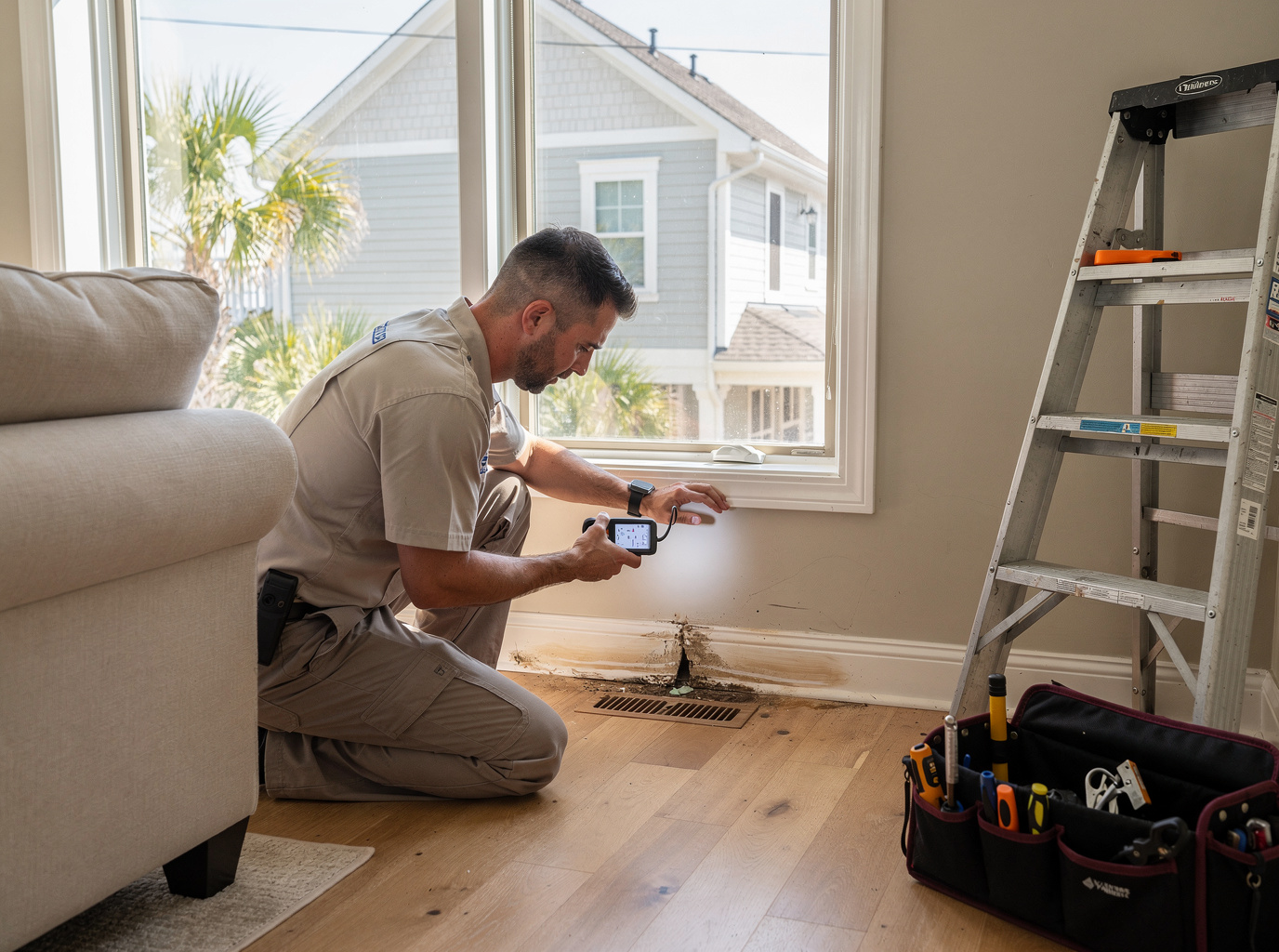
Suffolk sits just west of Chesapeake with older brick homes and frame houses clustered around the Nansemond River and the historic downtown grid. When Atlantic storms push water inland, properties along Main Street and the riverfront often see water enter crawl spaces and basements first. Our crews based at 2633 Production Rd leave Virginia Beach early to reach these addresses before moisture spreads through plaster walls or oak floors.
Summer humidity stays high here because the river and nearby wetlands hold moisture even after the rain stops. That means extraction and drying equipment must run longer than in drier inland spots. We set up containment around kitchens and baths in the 1950s ranch houses common near King’s Fork and monitor moisture meters daily until readings match the surrounding joists.
Access from the east comes mainly via Route 58 or the ferry route alternatives when traffic backs up. We keep trucks staged with extra dehumidifiers because return trips from Suffolk to our Virginia Beach shop can take over an hour during peak season.
Around Suffolk
We regularly work near:
- 📍Nansemond River
- 📍Suffolk Historic District
- 📍Constant’s Wharf Park
- 📍King’s Fork High School
- 📍Downtown Suffolk
- 📍Riddick's Folly House Museum
Water Damage Restoration in Suffolk — Local Notes
- •Many Suffolk homes built before 1970 have fieldstone foundations and shallow crawl spaces that collect river seepage after heavy rains.
- •Lots near Constant’s Wharf and the Nansemond often sit lower than the street, so water flows toward the house instead of away during nor’easters.
- •Historic district rules limit exterior changes, so drying equipment must be placed inside or in side yards without disturbing period landscaping.
- •Clay-heavy soils along the river slow natural drainage, requiring longer extraction times compared to the sandy lots closer to the Virginia Beach oceanfront.